
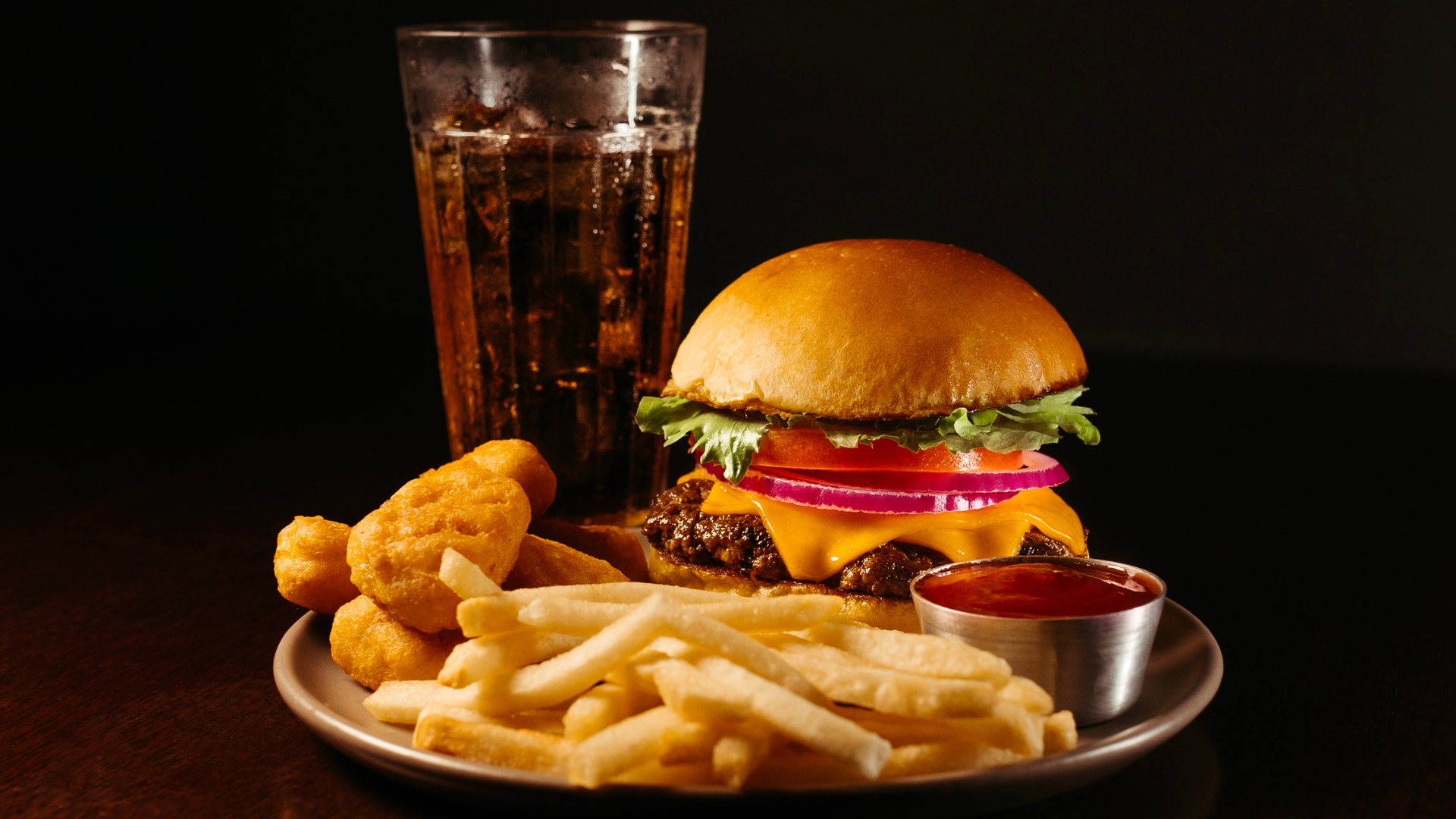
The food and beverage (F&B) industry is a major component of the global economy, supplying essential goods to billions of people. Alongside its economic and social contributions, the sector generates significant environmental impacts through agricultural production, international and domestic logistics, and packaging systems.
Environmental concerns include greenhouse gas (GHG) emissions, water and land use, energy consumption, and waste generation. Increasingly, regulatory requirements, corporate reporting standards, and consumer preferences are driving the need for detailed environmental assessments.
This article examines the environmental impacts of the F&B sector across three primary stages—production, transportation, and packaging—drawing on life cycle assessment (LCA) findings and current research data.
Stage 1: Environmental Impact of Food Production
GHG emissions and energy use
Agricultural activities contribute approximately 21–37% of total global GHG emissions [1]. Emissions originate from:
- Fertilizer application and associated nitrous oxide (N₂O) release.
- Land use change, including deforestation for livestock grazing and crop cultivation.
- Methane emissions from ruminant livestock.
- Energy-intensive industrial food processing.
Energy-intensive food processing, like meat processing, relies heavily on grinding, packaging, and heating and cooling systems. Refrigeration in meat processing accounts for 50–93% of electrical consumption. [9]
The stretch-blow moulder in a PET bottling plant consumed an average of 157 kW of energy—over 50% of the total electrical consumption for the production line. Specific energy consumption in 2022 was 0.23–0.49 MJ per litre for non-alcoholic beverages and 0.67–1.49 MJ per litre for breweries. [7]
Animal-derived products generally have higher GHG intensities than plant-based foods. For example, beef production has been reported to emit around 27 kg CO₂e per kilogram, while legumes average 2–3 kg CO₂e [6].
Land and water use
Livestock farming accounts for 77% of global agricultural land use, yet provides only 18% of global calorie supply [5]. Water use is also disproportionately high; producing 1 kg of beef can require more than 15,000 liters of water, compared to 1,600 liters for cereals.
Plant-based foods generally require less land and water, although certain crops—such as almonds—can be water-intensive in arid regions.
Data insight
‘’Life cycle studies from ScienceDirect (2021) and MDPI (2019)’’, indicate that replacing 50% of global animal-based protein with plant-based alternatives could reduce agricultural GHG emissions by 31% and water use by 19% [1], [6].
Stage 2: Transportation Emissions in the F&B Sector
Supply chain complexity
Global supply chains result in significant transportation emissions. The concept of “food miles” captures the environmental cost of transporting food from production to consumption, which can be particularly high for perishable goods transported by air.
Cold chain logistics
Products such as seafood, dairy, and frozen foods often require refrigeration during storage and transport. Cold chain systems increase energy demand and may involve refrigerants with high global warming potential. Global Warming Potential (GWP) is a measure of how much heat a greenhouse gas traps in the atmosphere over a specific time period, relative to carbon dioxide. Refrigerants are substances used in cooling systems, such as refrigerators and air conditioners, to absorb heat from one area and release it into another. Some refrigerants have a high Global Warming Potential (GWP), meaning they can trap a significant amount of heat in the atmosphere if released, contributing to climate change.
Transport modes
Emission intensity varies by mode of transport:
- Air freight: highest, typically 1.3–1.5 kg CO₂e per ton-km.
- Road freight: moderate, around 0.1–0.2 kg CO₂e per ton-km.
- Rail and sea freight: lowest per ton-km emissions.
Data insight
According to PMC (2020) and ScienceDirect (2024), transportation typically accounts for 5–19% of total product emissions, though this can exceed 50% for air-freighted items [2][5]. Shifting toward local or regional sourcing reduces emissions in certain categories.
for instance, Blue Hill at Stone Barns, a renowned restaurant in New York, has built its entire philosophy around sourcing ingredients almost exclusively from its own farm or from other local farms within a very tight radius. This approach significantly minimises the "food miles" associated with their ingredients, drastically cutting transportation-related carbon footprints compared to restaurants relying on a global supply chain.
Stage 3: Environmental Cost of Packaging
Common packaging materials and impacts
The environmental impacts of packaging depend on material type and production process:
- PET plastic: lightweight but fossil fuel-derived.
- Glass: chemically inert and recyclable but heavy, increasing transport emissions.
- Aluminum cans: high initial emissions from production but highly recyclable.
- Paperboard: renewable but often coated, complicating recycling.
Disposal and recycling challenges
Recycling rates remain low in many regions due to contamination, lack of infrastructure, and inconsistent policy implementation [3].
Alternatives
Bio-based plastics, compostable packaging, and refillable systems are emerging, but their environmental benefits depend on infrastructure and end-of-life management. For example, compostable packaging requires industrial composting facilities to avoid landfill disposal.
Data insight
Life Cycle Initiative and ResearchGate (2005) data show that the carbon footprint of 1-liter beverage packaging can be ~82 g CO₂e for PET bottles, ~130 g for aluminum cans, and ~345 g for glass bottles [3][4]. This highlights the importance of lightweight, recyclable materials in reducing total product impacts.
Cross-Stage Case Example: Dairy Milk vs. Oat Milk
Comparative LCAs of dairy and oat milk show differences across all three stages:
- Production: Dairy milk emits about 3.2 kg CO₂e per liter, oat milk about 0.9 kg CO₂e.
- Transportation: Dairy milk is usually locally produced but requires refrigerated distribution; oat milk may travel further but can be stored without refrigeration before opening.
- Packaging: Both products may use cartons, PET, or glass, with packaging accounting for 5–12% of the total footprint.
Oat milk’s total cradle-to-grave emissions are generally less than one-third of dairy milk’s[1][5]. Oat milk's production generally has lower impacts due to several factors:
- Lower land use: Oats require significantly less land to grow compared to the land needed for cattle grazing and feed crops for dairy cows.
- Lower water use: Oat cultivation typically demands less water than dairy farming, especially when considering the water needed for cows to drink and for feed production.
- Reduced methane emissions: Unlike dairy cows, which produce methane (a potent greenhouse gas) through enteric fermentation, oat production does not generate these emissions.
- Less fertilizer input: While fertilizers are used for oats, the overall agricultural inputs, including synthetic fertilizers, can be lower per liter of oat milk produced compared to dairy milk.
Conclusion and Recommendations
The environmental impacts of the F&B industry are distributed across production, transportation, and packaging. Agriculture remains the primary contributor, followed by packaging production and logistics.
Key recommendations include:
- Conducting full-scope LCAs prior to product introduction to identify impact hotspots.
- Diversifying product portfolios toward lower-impact options, including plant-based foods.
- Improving logistics efficiency and increasing regional sourcing where feasible.
- Expanding adoption of circular packaging systems and strengthening compliance with Extended Producer Responsibility (EPR) regulations.
Addressing impacts across all stages will support the sector’s transition toward lower-carbon, resource-efficient operations while meeting regulatory and reporting requirements.
Addressing impacts across all stages will support the sector’s transition toward lower-carbon, resource-efficient operations while meeting regulatory and reporting requirements. This transition not only mitigates environmental damage but also delivers significant increases in brand reputation, attracts environmentally conscious consumers, improves operational efficiency through reduced resource consumption, and gains a competitive edge in a rapidly evolving market. Also, proactive engagement with environmental impacts can lead to reduced regulatory risks and improved access to green financing.
To secure long-term resilience, drive innovation, and contribute to a healthier planet while ensuring continued profitability, food and beverage businesses should proactively assess their environmental footprint. This involves implementing sustainable practices across production, transportation, and packaging, and transparently reporting on their progress by integrating sustainability into their core business strategy.
References
- Life Cycle Assessment of Greenhouse Gas Emissions from Global Food Systems. https://www.sciencedirect.com/science/article/pii/S1364032121001507.
- Environmental Impacts of Food Transportation: A Comprehensive Review. PMC. https://pmc.ncbi.nlm.nih.gov/articles/PMC7664184/.
- Food Packaging: Environmental Impacts and Alternatives. https://www.lifecycleinitiative.org/wp-content/uploads/2013/11/food_packaging_11.11.13_web.pdf.
- The carbon footprint and energy consumption of beverage packaging: selection and disposal. https://www.researchgate.net/publication/222162485_The_carbon_footprint_and_energy_consumption_of_beverage_packaging_selection_and_disposal.
- Rethinking Land and Water Use in the Global Food System: Implications for Sustainability. ScienceDirect. https://www.sciencedirect.com/science/article/pii/S0048969724011860.
- Environmental Impact Assessment of Plant-Based Versus Animal-Based Protein Production. MDPI. https://www.mdpi.com/2071-1050/11/3/925.
- 2023-BIER-Benchmarking-Executive-Summary-Report.pdf
- C.A. Ramírez, M. Patel, K. Blok, How much energy to process one pound of meat? A comparison of energy use and specific energy consumption in the meat industry of four European countries, Energy, Volume 31, Issue 12, 2006 https://www.mdpi.com/1255972
- Banach, Joanna & Żywica, Ryszard & Matusevičius, Paulius. (2021). Influence of various chilling methods on the sustainable beef production based on high voltage electrical stimulation. PLOS ONE. 16. e0240639. 10.1371/journal.pone.0240639. https://www.researchgate.net/publication/355899441_Influence_of_various_chilling_methods_on_the_sustainable_beef_production_based_on_high_voltage_electrical_stimulation
Add a Comment
Your email address will not be published. Required fields are marked *