
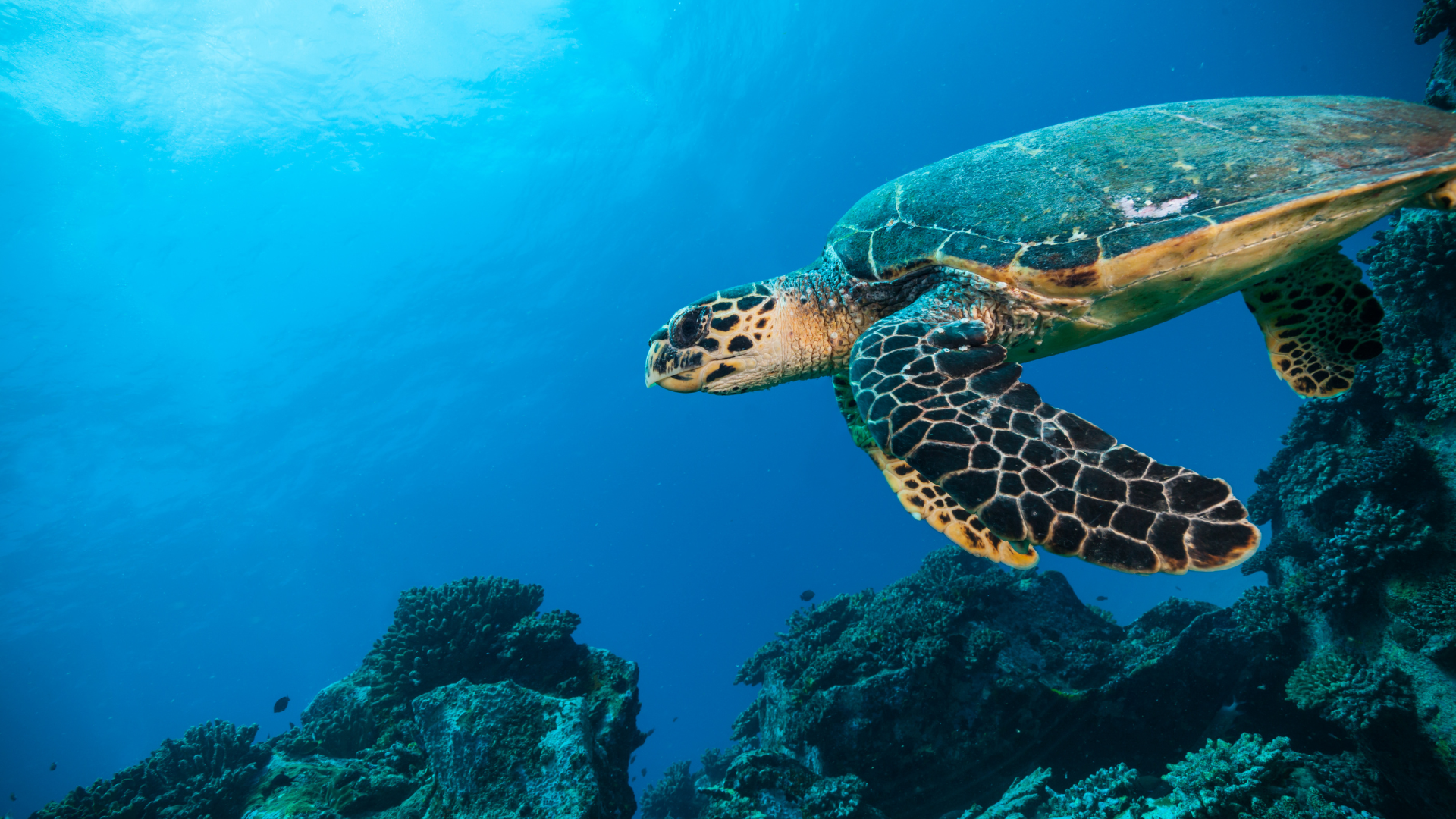
The Earth's oceans, covering three-quarters of its surface and constituting 95% of the biosphere, hold immense potential for economic growth, biodiversity, and ecosystem balance. Oceans are the birthplace of life on Earth, and they continue to play a vital role in supporting all life today. They generate oxygen, absorb carbon dioxide, recycle nutrients, and regulate global climate and temperature.Not only this, the Ocean economy generates $1.5 trillion of business each year, and is estimated to reach $3 trillion by 2030. “80% of global trade by volume is carried by sea”. [1] However, with the diverse potential and generating global economy, there is a growing concern over climate change and rising carbon emissions, it has become imperative to harness the power of the ocean economy in a sustainable manner.
The Sustainable Blue Economy: Balancing Growth and Conservation
The sustainable blue economy is an emerging economic model that seeks to utilise ocean resources in a manner that is both economically and environmentally sustainable. The blue economy, which encompasses economic opportunities from the ocean, also protects and develops intangible blue resources such as traditional ways of life, carbon sequestration, and coastal resilience. These resources can help vulnerable states mitigate the devastating effects of poverty and climate change.[2]
80% of ocean pollution originates from land.[3] Being said that one cannot ignore the “Great Pacific Garbage Patch”, which is the ocean debris of plastics and other non biodegradable materials & rising global temperature for loss of biodiversity and ecological functioning and decline of environmental benefits from the oceans and coastal areas. According to FAO (Food and Agriculture Organization of the United Nations) 87% of global fish stocks are being fully or overexploited.[1] Human activities have severely strained the resilience of ocean resources, unsustainable coastal developments, and the adverse impacts of climate change such as ocean acidification occurring at an unprecedented rate.
Additionally, the marine and coastal environment is a valuable asset for the thriving tourism industry, encompassing both traditional beach-based tourism and the expanding realm of nature-based tourism. Providing to employ approximately “40 million full‑time equivalent jobs by 2030 in the business as‑usual scenario.”[4]
The oceans have immense potential to support sustainable development, but only if they can be kept in or restored to a healthy, productive state.

Blue Economy Solutions Spearheading the Fight Against Carbon Emissions:
1.Ocean-Based Renewable Energy: A Beacon of Hope for Carbon-Free Future"
A key solution within the sustainable blue economy is the development of ocean-based renewable energy sources. Offshore wind farms, tidal energy, and wave energy offer sustainable alternatives to fossil fuels. Countries like Denmark, the United Kingdom, and Germany have successfully implemented offshore wind projects, demonstrating both environmental benefits and economic opportunities.
India, with its extensive 7,600 km coastline, has significant potential for offshore wind energy. The government has set an ambitious target to auction 37 GW of offshore wind capacity by 2030. Achieving this goal could bring substantial social and economic benefits, particularly in states like Tamil Nadu, which has the potential to unlock EUR 72 billion in offshore wind investments. The 2025 Union Budget reflects this commitment, with a 53% increase in funding for renewable energy, emphasizing wind energy's crucial role in India's clean energy expansion.
2. Revolutionising Maritime Transportation: Green Shipping for Reduced Carbon Footprint
Another significant aspect of the sustainable blue economy involves transforming maritime transportation. The shipping industry, a major contributor to global carbon emissions, is exploring innovative technologies to reduce its environmental impact. Hydrogen fuel cells, biofuels, and wind-assisted propulsion systems are among the promising solutions being developed. These technologies offer greener alternatives to traditional fossil fuel-powered vessels, potentially reducing the industry's carbon footprint substantially.
Policy initiatives and international collaborations are essential to promote sustainable practices in maritime transportation. Coordinated policy action is necessary to sustain the trillion-dollar ocean economy and address mounting climate risks. By implementing stringent environmental regulations and providing incentives for adopting green technologies, the shipping industry can navigate toward a more sustainable future.
Conclusion: Charting a Sustainable Course for India's Blue Economy
India, with its vast coastline and maritime heritage, stands to benefit greatly from embracing the sustainable blue economy. The country has significant potential for offshore renewable energy, particularly in the areas of offshore wind and tidal energy. By investing in research, development, and infrastructure, India can harness the power of the ocean to meet its growing energy demands while reducing carbon emissions. Furthermore, India's shipping industry can adopt greener practices to minimise its environmental impact. Encouraging the use of alternative fuels, investing in energy-efficient technologies, and promoting collaboration between stakeholders are key steps towards achieving a sustainable maritime sector.
The sustainable blue economy holds immense potential in addressing the dual challenges of economic growth and environmental conservation. By embracing this economic model, we can harness the power of the oceans to combat carbon emissions and mitigate the impacts of climate change. Ocean-based renewable energy and green shipping technologies are key solutions within the sustainable blue economy, offering both environmental benefits and economic opportunities. As we chart a sustainable course for the blue economy, countries like India can lead the way by investing in research, development, and collaborations to unleash the full potential of the ocean economy while ensuring a sustainable and prosperous future for generations to come.
List of reference
- https://www.popularmechanics.com/science/environment/a41586056/how-deep-is-the-ocean/
- https://production-new-commonwealth-files.s3.eu-west-2.amazonaws.com/s3fs-public/2022-02/The%20Blue%20Economy%20Concept%20Paper.pdf
- https://thecommonwealth.org/bluecharter/sustainable-blue-economy
- https://production-new-commonwealth-files.s3.eu-west-2.amazonaws.com/s3fs-public/2022-02/Untitled%20design.jpg
Add a Comment
Your email address will not be published. Required fields are marked *