
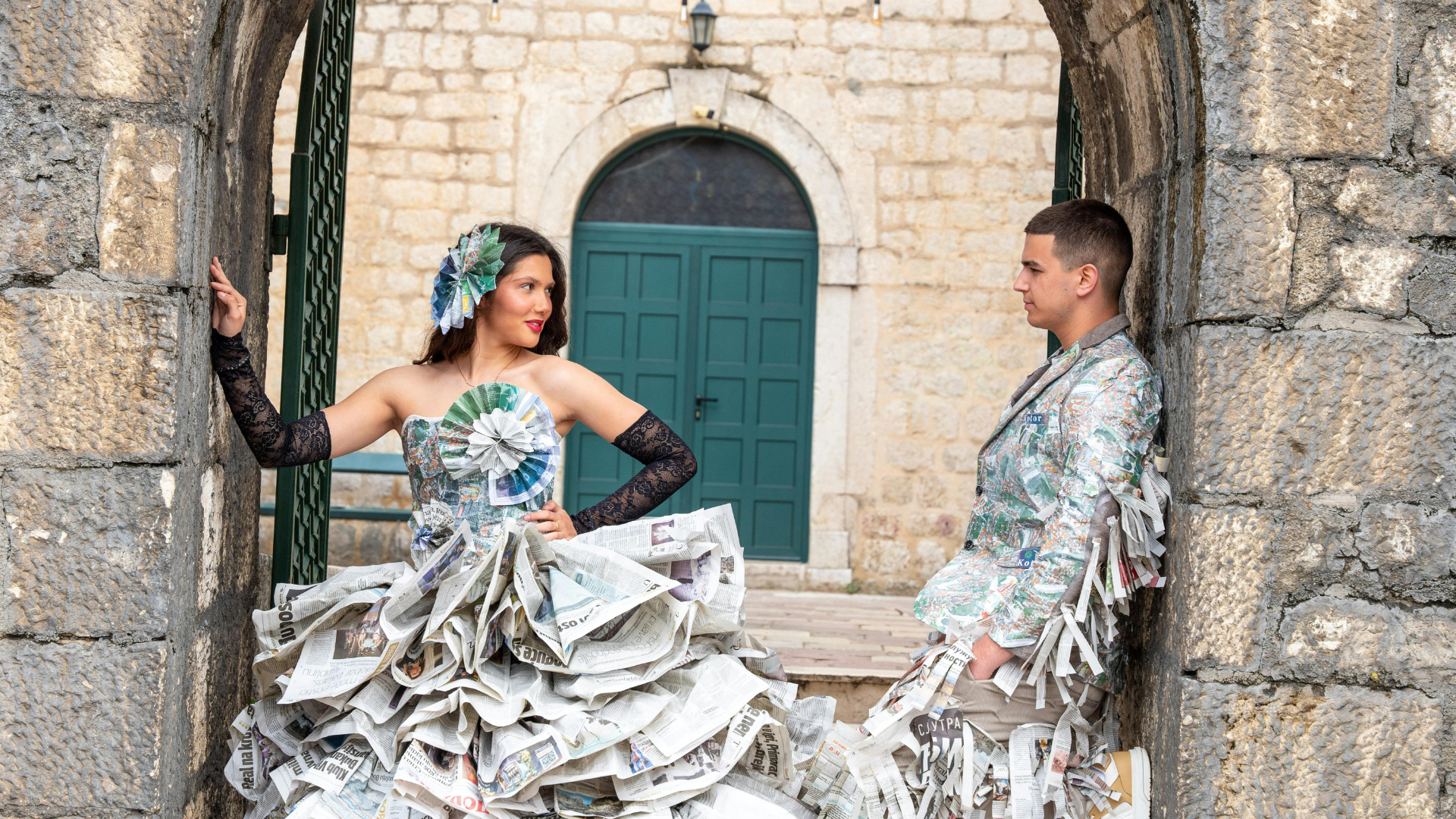
The fashion industry in India is facing serious sustainability challenges that reflect global trends but also have distinct local aspects. It is responsible for approximately 2% of the country’s greenhouse gas emissions and consumes nearly 4% of its freshwater, with textile dyeing and finishing processes being especially water-intensive. The sector is a significant contributor to microplastic pollution, with synthetic fibres accounting for about 35% of the microplastics in India’s waterways. Changing consumer habits are exacerbating these issues; Indians are purchasing nearly 50% more clothing than they did a decade ago in 2013, but garments are worn less often, resulting in about 12.8 million tons of textile waste each year, with 60% ending up in landfills or being incinerated within a year. Additionally, untreated dye effluents severely contaminated water bodies, including key rivers like the Ganges. Although there are initiatives aimed at promoting sustainable fashion and better waste management, a considerable gap remains between current practices and the global sustainability goals. [4] [5]
Revamping Indian Fashion: Embracing Circular Economy Model
The circular economy concept, which emerged in the 1970s, focuses on sustainable production and consumption by emulating nature's recycling processes. It aims to maximise resource efficiency during manufacturing, prioritising repair, reuse, and recycling over disposal to cut energy use, waste, and inefficiencies. This model treats even used items as valuable resources and supports sustainability, individual well-being, and local economies. [1]
The fashion industry is adopting the circular economy (CE) to improve sustainability, but significant challenges remain. The shift from the traditional "take-make-dispose" model to a circular approach is still in its early stages, requiring major changes across the supply chain. While no unified framework exists, some companies are starting to implement circular practices. Circular fashion aims to create a restorative system where garments, textiles, and fibers maintain their value throughout their lifecycle and are reintegrated into the economy to prevent waste. This involves extending garment lifespans, using renewable materials, and developing recycling methods to close the loop. Despite growing awareness and technological advances, the industry faces barriers like a lack of skilled labor, inadequate infrastructure, and insufficient stakeholder commitment. [2] [3]
Challenges in Implementing Circularity in India
The fashion industry struggles with adopting Circular Economy (CE) practices due to several key obstacles. Ineffective organisational policies and poor strategic planning hinder the integration of CE principles, while the absence of proper performance metrics makes it challenging to measure and manage these practices. Additionally, limited education and training in CE obstruct the effective implementation and sustainability of these practices. Technological innovations vital for waste management and value recovery are frequently underused, especially in developing countries, and are further impeded by a lack of stakeholder commitment and cooperation.
Waste collection and sorting processes are often inefficient, leading to poor recycling and value recovery. The low market demand for recycled materials and the difficulty in offering them at competitive prices, combined with technical issues like insufficient knowledge and inadequate recycling infrastructure, worsen the situation. There is also a significant knowledge gap and lack of awareness about CE practices among both consumers and industry stakeholders, which further impedes the adoption of sustainable practices.
Advancing Circular Fashion Technologies: How Indian Brands Pero, Doodlage, and Nicobar Are Innovating Sustainability
As Indian fashion designers transition towards a circular economy, they are increasingly adopting strategies focused on slowing and closing resource loops despite the challenges faced. Prominent brands such as Pero, Doodlage, and Nicobar exemplify this shift by incorporating circular principles into their designs.
Pero prioritises traditional handloom techniques and ethical craftsmanship by emphasising handwoven fabrics to support artisanal skills, ensuring fair wages and ethical working conditions for artisans, and incorporating natural dyes and sustainable materials to reduce waste and environmental impact.
Fashion is a major contributor to plastic pollution, with about 180 billion poly bags produced each year and less than 15% recycled. To tackle this issue, Doodlage and Lyfecycle have joined forces to create eco-friendly, self-destructing packaging. Doodlage, known for its zero-waste and recycling efforts, transforms leftover and discarded materials into new garments and uses sustainable fabrics to minimise environmental impact. Lyfecycle's innovative technology ensures that if its packaging escapes into the environment, it breaks down into harmless wax, supporting responsible disposal and promoting a circular fashion model.
Nicobar embraces circular economy principles by utilising organic cotton and other sustainable fabrics, adhering to fair trade practices to promote ethical labor, and prioritising biodegradable materials to lessen the environmental impact of its products.
Despite these advancements, the adoption of circular strategies remains uneven among Indian fashion designers. Many are still exploring these approaches, and there is a need for a more comprehensive and integrated application of circular design principles. Future efforts should focus on educating designers about circular strategies and encouraging businesses to embrace sustainable practices fully. By doing so, the industry can benefit from a more cohesive and innovative approach to circular fashion. [6] [7] [8]
Conclusion
The $2 trillion fashion industry contributes over 2% to global GDP and is responsible for 4% of global greenhouse gas emissions, largely due to fiber production like polyester and cotton. Production waste ranges from 6% to 25%, and while extending garment life could reduce environmental impact by 49%, only 25% of clothes are collected for reuse, with just 1% recycled into new materials. This underscores the need for better recycling and waste management.
India’s fashion industry is at a pivotal moment. Adopting a circular economy can reduce waste and meet the demand for sustainable products. Circular fashion—focused on recycling, reusing, and upcycling—can improve brand reputation, comply with regulations, and lower costs. With rising consumer demand and supportive policies, adopting circular design and advanced recycling technologies is essential for a sustainable future.[9] [10]
List of References
- Circular Economy: Definition and Principles. (2024, March 28). https://greenly.earth/en-us/blog/company-guide/circular-economy-definition-and-principles
- Fashion and the circular economy. (n.d.). https://www.ellenmacarthurfoundation.org/fashion-and-the-circular-economy-deep-dive
- Analysing the Challenges to Circular Economy in Indian Fashion Industry. (2022, December 29). IEEE Access. https://ieeexplore.ieee.org/stamp/stamp.jsp?arnumber=10003142
- S.G., P. (2022, January). Analyzing the Challenges to Circular Economy in Indian fashion industry. Research Gate. https://www.researchgate.net/publication/366683552_Analyzing_the_challenges_to_circular_economy_in_Indian_fashion_industry
- About Ministry | Ministry of Textiles | GOI. (n.d.). https://www.ministryoftextiles.gov.in/about-us
- Nerurkar, O. (2018). Circular Product Design Strategies used by Indian Fashion Designers. In Symbiosis Centre for Management Studies & Symbiosis International (Deemed University), International Journal of Applied Engineering Research (Vol. 13, Issue 7, pp. 4851–4854). Research India Publications. https://www.ripublication.com/ijaer18/ijaerv13n7_33.pdf
- Arora, A. (n.d.). péro. http://pero.co.in/index.html
- Subramanian, A. (2023, June 22). Doodlage takes another step towards conscious fashion by creating self-destructing packaging. Vogue India. https://www.vogue.in/content/doodlage-adds-another-layer-to-its-oath-to-conscious-fashion-by-creating-self-destructing-packaging
- Cascale. (2024, August 23). Cascale. https://cascale.org/
- Good, F. F. (2022, July 27). The state of circular innovations in the Indian fashion and textile industries. Fashion for Good Reports. https://reports.fashionforgood.com/report/state-of-the-circular-innovations-in-the-indian-fashion-and-textile-industry/
Add a Comment
Your email address will not be published. Required fields are marked *